More than 90% Cummulative Success Rate
More Than 1,00,000 Successful Couples
Free Counsulting
+91 98427 45045
Fertility Foundation
15th Street, 2nd Avenue, Ashok Nagar, Chennai-83
More Than 1,00,000 Successful Couples
+91 98427 45045
15th Street, 2nd Avenue, Ashok Nagar, Chennai-83

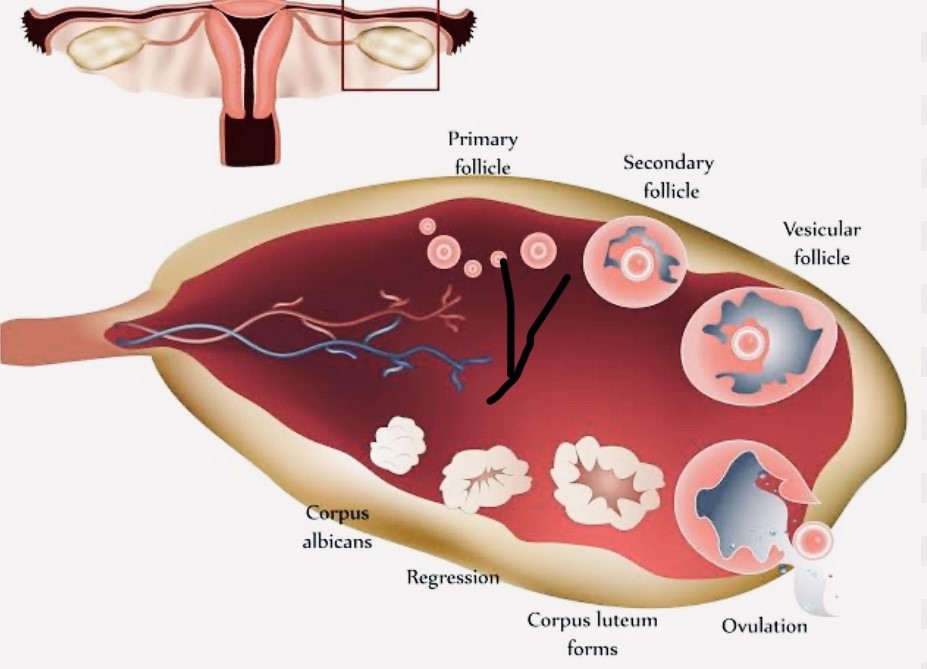
Ovarian follicles form a major part of female reproductive system. Ovarian follicles are small sacs filled with fluid that are found inside a woman’s ovaries. Ovarian follicles protect, nurture and secrete hormones that influence stages of the menstrual cycle. These follicles contain egg that are released every month for fertilization. Follicles and their size and status are a vital part of assessing fertility and fertility treatments.
Every woman is born with fixed number of follicles. As age advances, the number of follicles start declining, so does the quality of her eggs. Throughout the life of a woman, many follicles disintegrate or get reabsorbed by the body while every month only one follicle releases a mature egg. After the age of 35 years a woman’s fertility starts to decline significantly and by her early to mid – forties, the chances of achieving a successful pregnancy by natural means are very slim. So, the number of ovarian follicles in a woman’s body is directly related to her fertility.
Without the follicles, the eggs are not safe and cannot get ready for fertilization. Fertility issues in women are mostly related to these follicles. They can be broadly classified into 2 types:
Here the woman’s ovaries stop working much before expectation. When a woman has trouble getting pregnant, suffers from irregular periods and shows early signs of menopause, the doctors check this condition first.
Polycystic Ovarian Syndrome or PCOS is another common condition that results in irregular periods, decreased fertility and hormonal imbalances. When the follicles do not go through its natural stages of development, it can result in PCOS. This will cause multiple cysts in the ovaries.
FREQUENTLY ASKED QUESTIONS
Every follicle will contain one egg which is released every month around 14th day of the menstrual cycle.
This is dependent on the women’s age, general health and lifestyle. However, more follicles do not necessarily guarantee successful fertilization. It is the quality of the egg that determines successful condition. So, even a woman with fewer follicles can get pregnant if the quality of her eggs is better.
There are 2 main follicle factors to consider when it comes to female fertility.
The number of follicles present within the ovaries indicates the number of immature eggs. These immature eggs develop and grow in size until the follicle reaches the optimum size after it is released (ovulation). Hence counting the number of eggs by ultrasound and also blood test for hormones will tell the fertility expert about the state of your fertility.
Egg quality is determined by the age of the women and lifestyle. As the women gets older, the quality of her eggs decreases (especially after the age of 35 years). Unfortunately, it is not possible to test the quality of your eggs.
Yes. You can get pregnant if even a single mature follicle releases into the fallopian tube and is fertilized by the sperm. As previously mentioned, it is the quality of the egg that is more important than the number of eggs.
If the scan shows 12 or more follicles in each ovary and if these follicles measure 2 – 9 mm in diameter, your fertility expert might make a diagnosis of PCOD/PCOS.
CONCLUSION
Ovarian follicles are an integral part of a female’s fertility. A lack of or malfunctioning of these ovarian follicles has a direct impact on a women’s fertility. Ovarian follicle reserve is directly related to chance of pregnancy and hence plays a very important role in conception. In case you have any other queries or doubts, please be free to contact our fertility expert at Fertility Foundation/ SISU Hospital at +9194433 00000 or visit www.sisuhospitals.com.

Fertility Foundation
is one of the top IVF and Fertility Centre in Ashok Nagar, Chennai. Being
best Fertility Hospital, we have expert Gynaecologist in Ashok Nagar to offer Infertility
Treatment, Gynecology Treatment, Fertility Treatment, IVF Treatment, Pcod Treatment, Pcos Treatment, Low
Sperm Count Treatment, Poor Egg Count Treatment, Assisted Hatching Treatment, Intrauterine
Insemination Treatment, Hormonal Treatment, Normal Delivery, C-Section
Treatment, Embryo Freezing Treatment and much more.